
B&C North Charleston InsulationB&C North Charleston InsulationRequest an estimate(843) 278-0240

Basement insulation in North Charleston SC - a warmer, drier room downstairs

Basement feels cold, clammy or smells musty? We sort out the dampness first, then insulate the walls so the room usually runs warmer and drier.

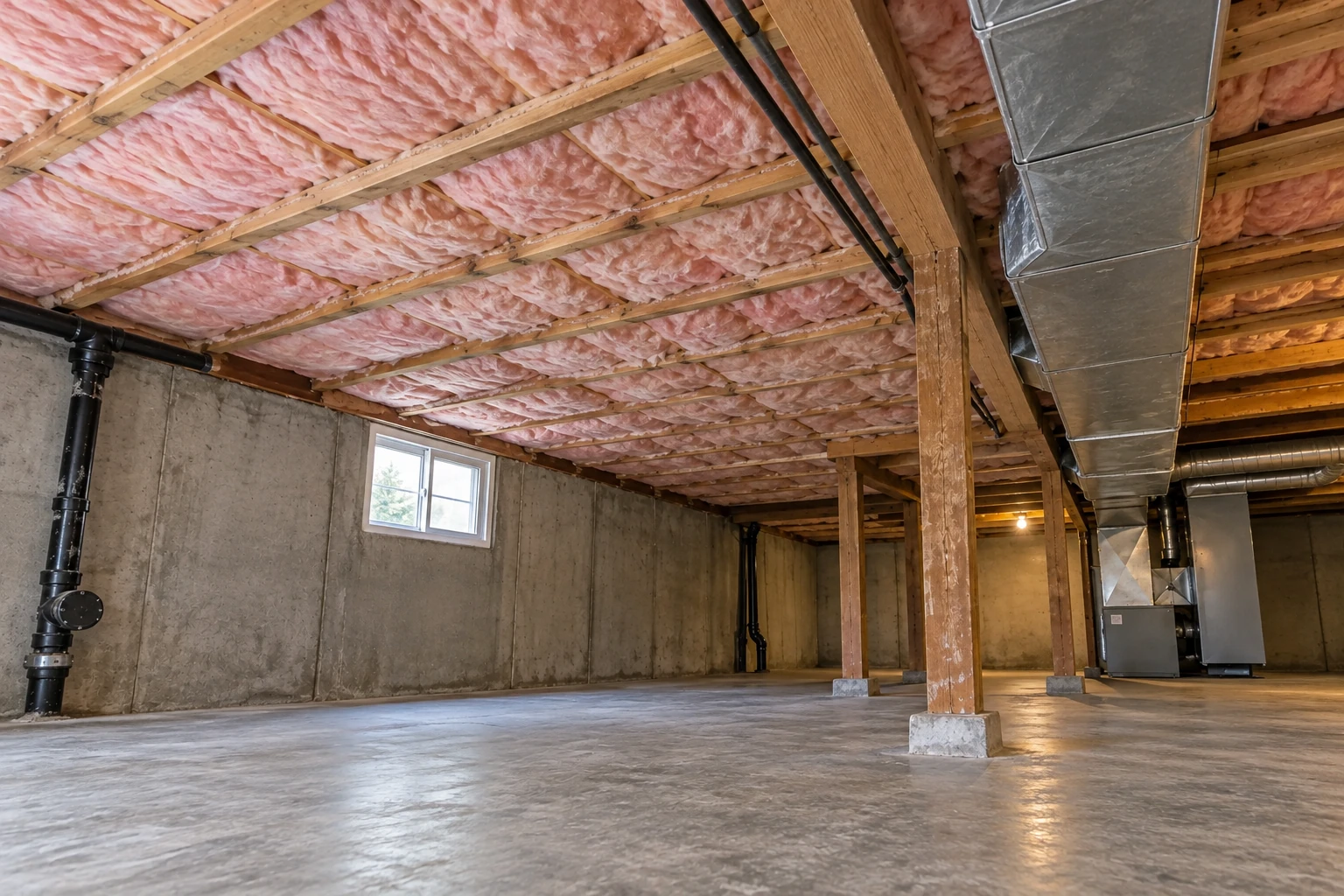
Pink insulation fills the ceiling joists of an unfinished basement above a concrete floor, with ductwork and support posts nearby.

How do I insulate a basement in North Charleston without trapping moisture?

Basement insulation in North Charleston means lining the foundation walls, usually with foam board or spray foam, once any dampness in them has been found and dealt with, so the room downstairs is warmer and easier to use.

Most of the basement calls I get start the same way, with a lower level that's cold underfoot in winter, clammy in summer or a little musty, and you'd like to use the room without that. The price mostly follows your wall area, the material that suits your walls and how much has to come off first, like old paneling or wet insulation, while the schedule turns on whether there's dampness to deal with before anything goes up. I write the estimate out step by step, so you'll see what goes where for your own basement. If your house sits over a crawl space instead, our crawl space insulation work is the closer fit.

How we handle basement insulation, one step at a time

I start with the walls, not the insulation. I check for damp patches, white crust on the concrete, staining and smell, and work out where it's coming from, because insulation laid over a damp wall just hides the problem and can hold water against it. If water is getting in, that gets dealt with first, and if the fix is outside our trade I'll tell you so plainly. Once the wall is dry, I pick the material that suits it, and our crew clears and cleans the wall, fits the insulation tight to the concrete, seals the seams and edges, covers it the way that material needs and cleans up before we leave.

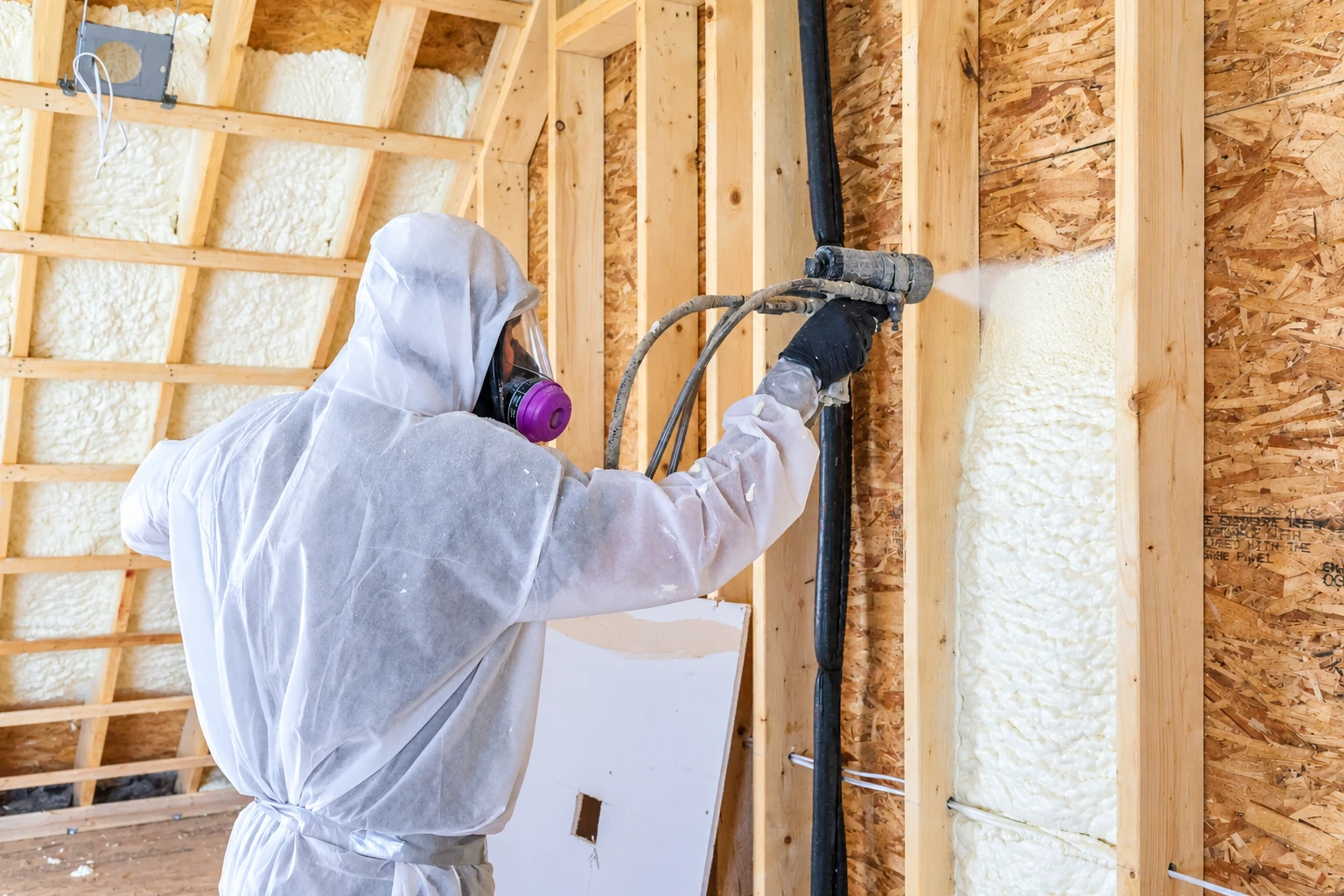
Spray foam ties this work to two of our other services. We install closed-cell foam insulation and open-cell foam insulation in attics, walls and crawl spaces as well, and in a basement it's how much moisture the wall sees that decides between them.

Foam board for flat, dry walls

Rigid foam board suits poured concrete that's straight, sound and dry, and it's usually the lower-cost way to do the job, so on a wall like that it's the one I'd pick. Each board has to sit tight to the wall with the seams and edges sealed, because an air gap behind it is where damp collects.

Closed-cell spray foam for rough or block walls

Spray foam fills block, stone and rough concrete that boards can't follow, and it seals air as it goes, so it earns its higher cost on a wall like that. Exposed foam has to be covered with ignition-barrier paint or drywall, so that covering is part of the job and the price.

Why North Charleston homeowners call B&C North Charleston Insulation for basement insulation

I look at every basement myself

I come out to every job, check the walls for damp, staining and smell, and write the estimate myself. Our installers then do the work with me or a lead installer on site, so there's someone in your basement who knows the plan and why each step comes where it does.

Insulating since 2023, after years in HVAC

I spent years as an HVAC service tech before starting this business in 2023, and that work kept showing me the same thing. Insulation over a leak or a damp spot only hides the problem, so I'd rather tell you a job can wait than sell you work your house won't use.

Licensed and fully insured on every job

South Carolina requires a current state license or registration for residential building and specialty contracting work, so it's fair to ask any contractor about theirs. We're licensed and fully insured. When you're ready to have your basement looked at, call (843) 278-0240 or use the form to set up a visit.

Get a step-by-step plan for your basement walls

Call or send the form and we'll reply within one business day to set a time. I come out, look at your walls for dampness first, and write you a free on-site estimate that lays out each step. There's no pressure and no obligation.

Location
North Charleston, SC 29418
Hours
Mon–Sun: 8 AM–9 PM

Basement insulation in North Charleston: permits and the termite rule

In North Charleston, the city's Building Department issues building permits and inspects renovations and residential projects, and whether your basement job needs one comes down to what that office asks for. The city also spreads across Charleston, Berkeley and Dorchester Counties, so before we start, we find out which office covers your address, check what it asks for and take care of any permit your job needs.

Where the state's residential code rates termite risk as "very heavy," foam plastic insulation can't go on the outside of foundation walls or slabs below ground, or under them, but the inside of a basement wall is exempt. In those areas, foam belongs on the inside face of the wall, which is the side we insulate. Most of the basements we're called to are in older houses, often a lower level that's only partly finished, and we do the same work across the cities around us, from Summerville to Goose Creek. If your city isn't on our list, call and ask.

Questions homeowners ask about basement insulation

How much does basement insulation cost in North Charleston?

Insulating basement walls usually costs about $4.40 to $6.40 per square foot across the US, which is a national figure for the wall work, not a North Charleston measurement or our price. Spray foam tends to sit higher than board, and anything that has to come off the wall first adds to it. Your own figure comes from the estimate, written out step by step.

What is the best insulation for a damp basement wall?

Closed-cell spray foam is usually the first one to price, because federal energy guidance ranks it best at controlling moisture of all the insulation used on the inside of foundation walls. Open-cell foam has to go on thicker to protect against vapor, so it's the weaker pick for a wall that sees damp.

Can fiberglass batts go right against a basement wall?

No, federal guidance says fiberglass batts and cellulose should stay out of contact with foundation walls, so a plan that puts them against the concrete is one I'd question. If you're finishing the room, the usual answer is foam on the concrete and any fiber only in a framed wall in front of it. Plastic sheeting, rubber membranes and foil facings should stay off the room side of fiber insulation too, since they can trap moisture in the wall, so ask any contractor what layer goes over the insulation before the drywall.

What causes a musty smell in a basement, and will insulation help?

Cooler basement air generally runs at higher humidity, and that is what usually leads to mold and the musty smell. Insulated walls usually keep the room warmer, and so drier, during humid summer weather. If the smell comes with wet spots on the concrete, tell me when you call so I look for that first.

How do I get ready for a basement insulation estimate?

Measure the basement wall area in square feet if you can, and jot down any damp spots, staining or smells and when you notice them. Clear a path to the walls so I can see the concrete, and have your notes handy when you call (843) 278-0240 or send the form.

Call (843) 278-0240