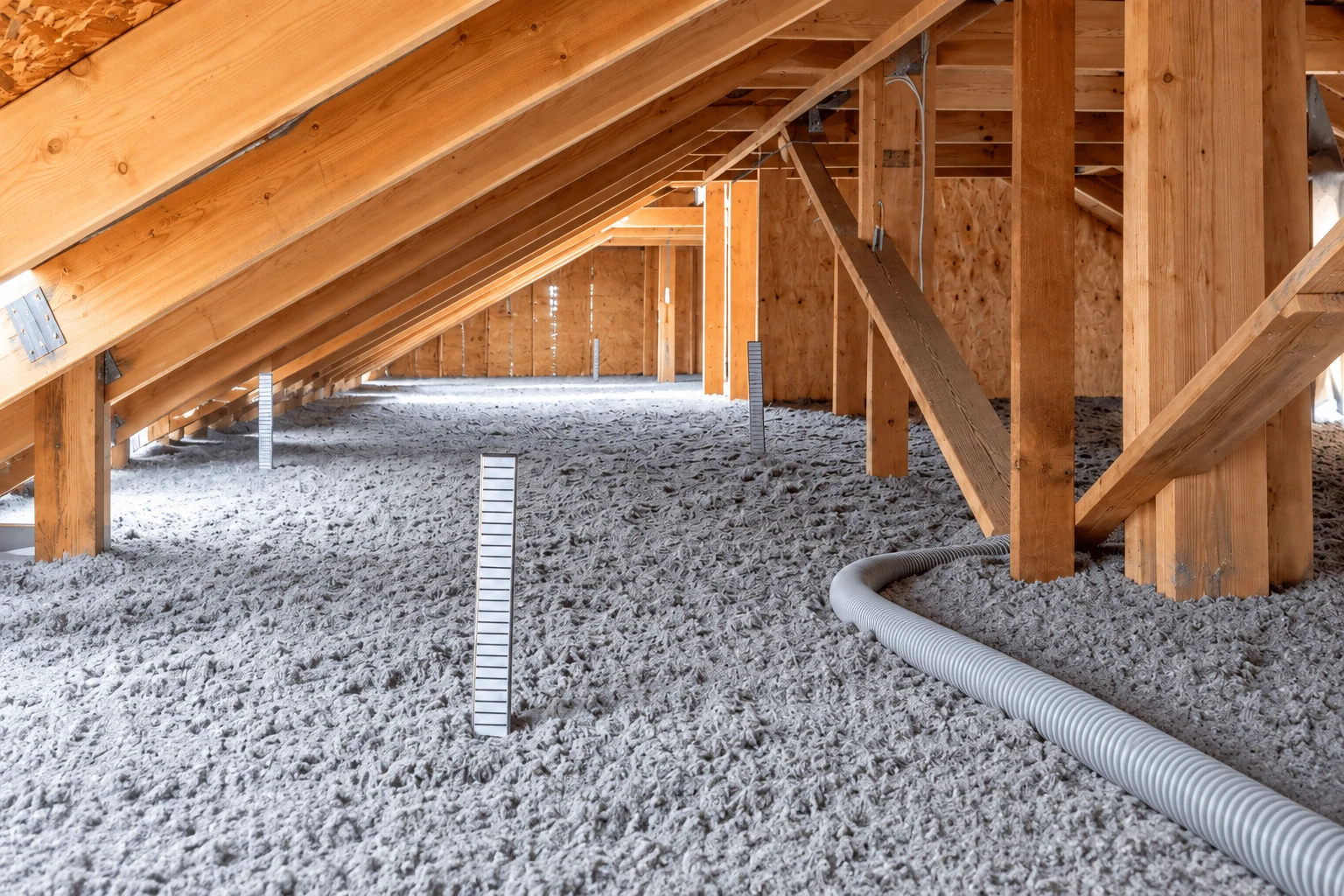
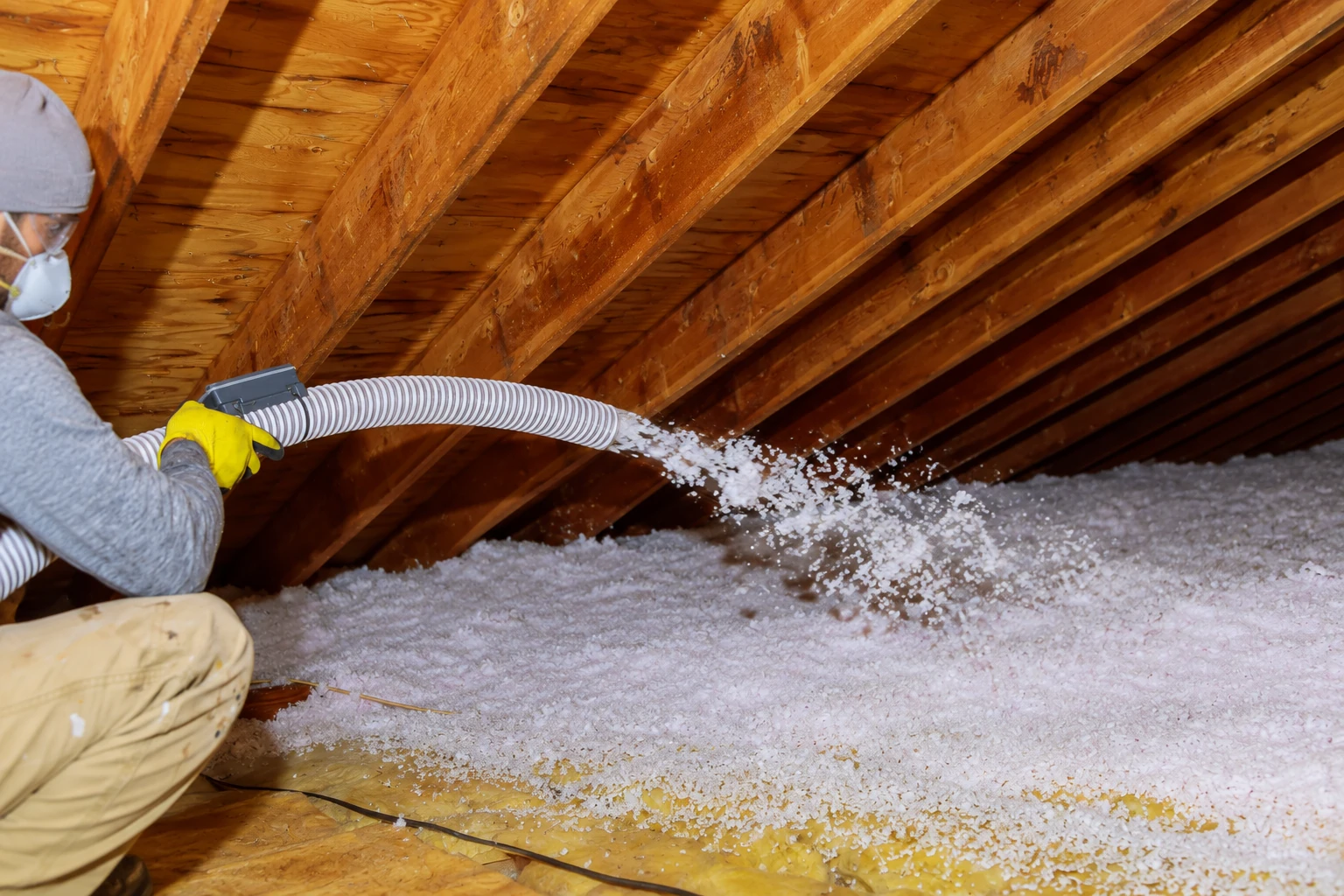
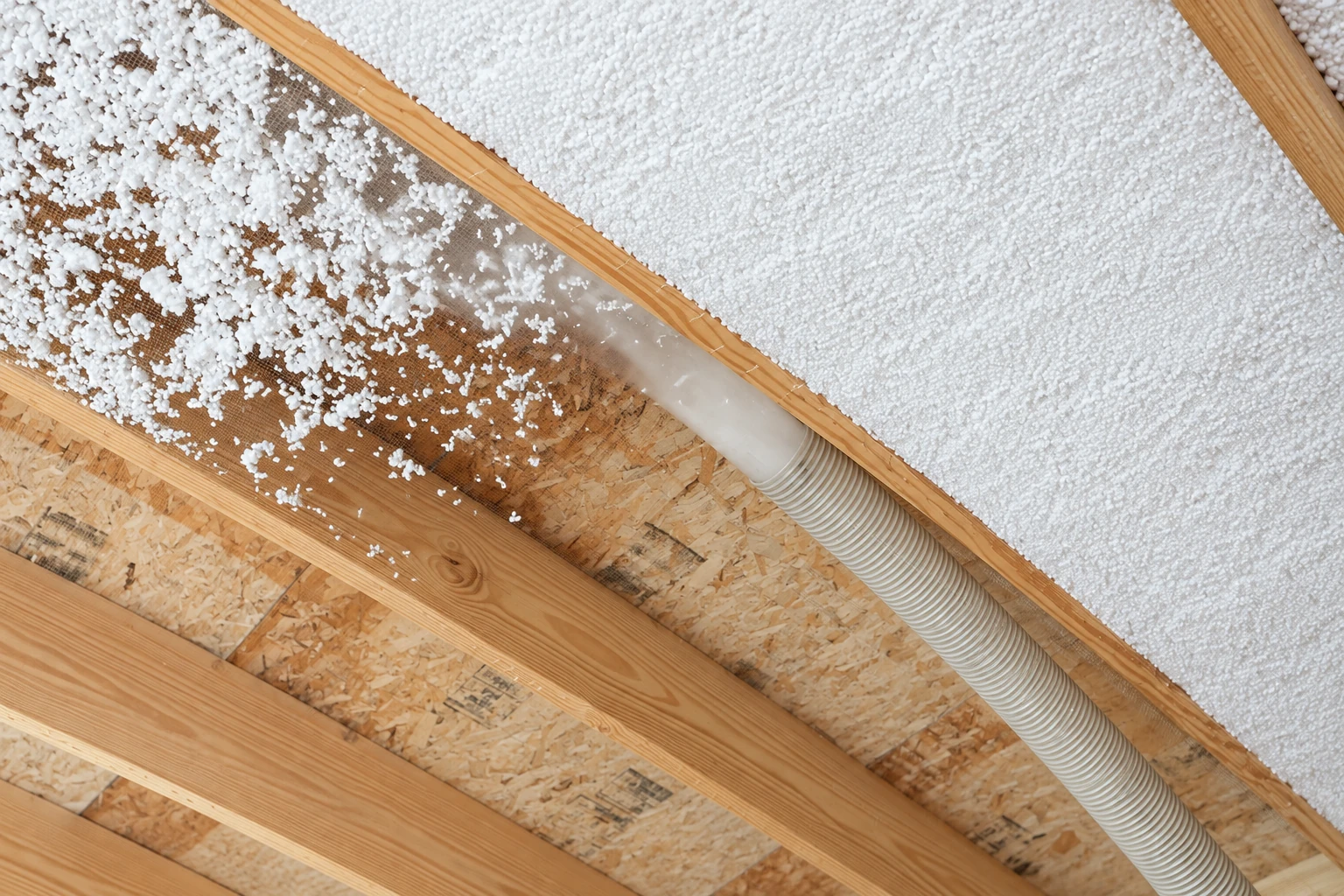
I start in the attic with a flashlight, checking what's already there and whether any of it is wet, matted down or full of droppings, because new fill laid over that just hides the problem. Next we seal the attic floor, closing the gaps around pipes, wires, light fixtures and the hatch, so the fresh insulation isn't fighting a draft. Then we set baffles, which are short channels at the eaves that hold the insulation back so the vents stay open and the attic can still breathe. Last, we blow the fill to an even depth from the middle out to the edges, where coverage most often comes up thin, and we leave depth markers up so you can check it yourself.
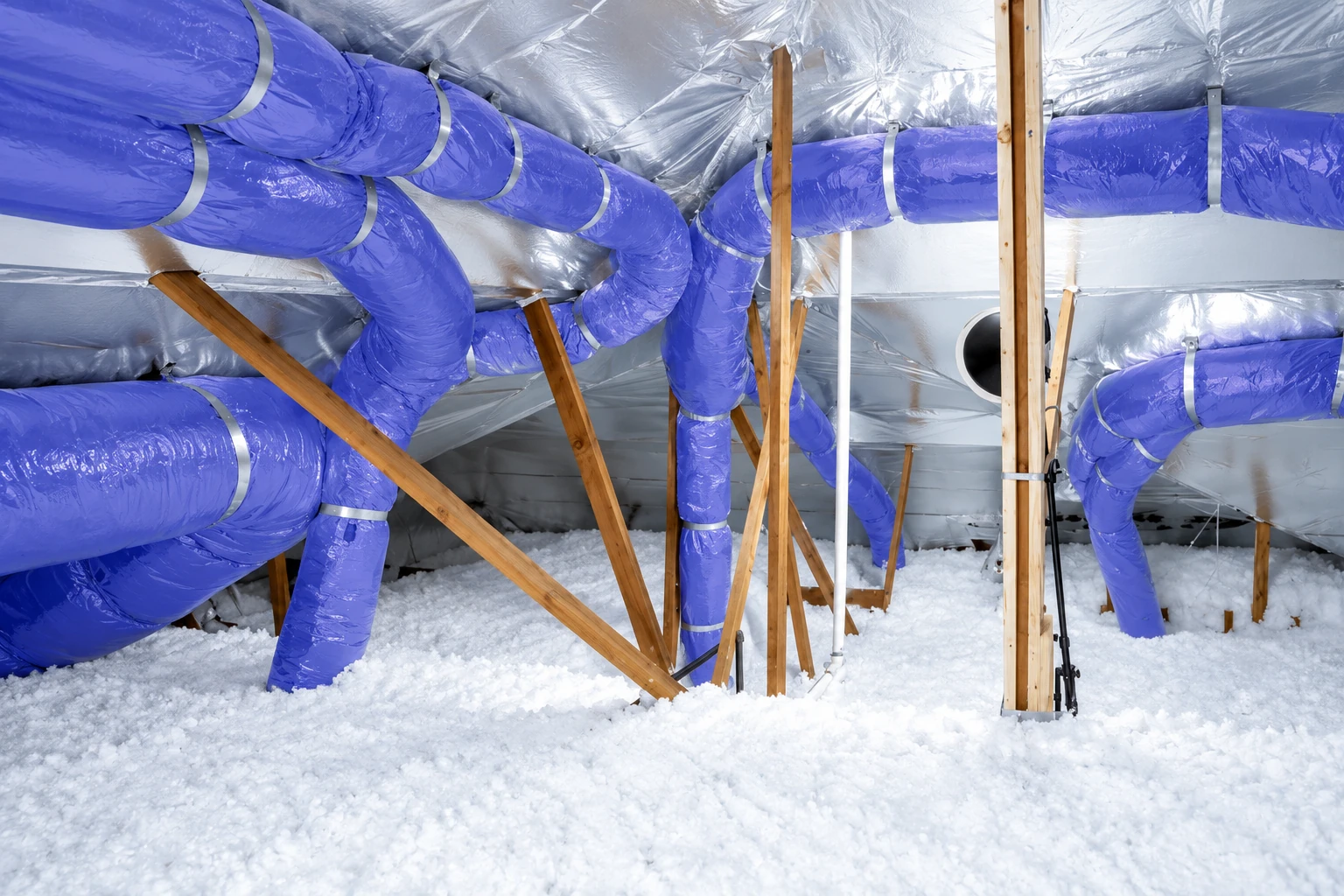
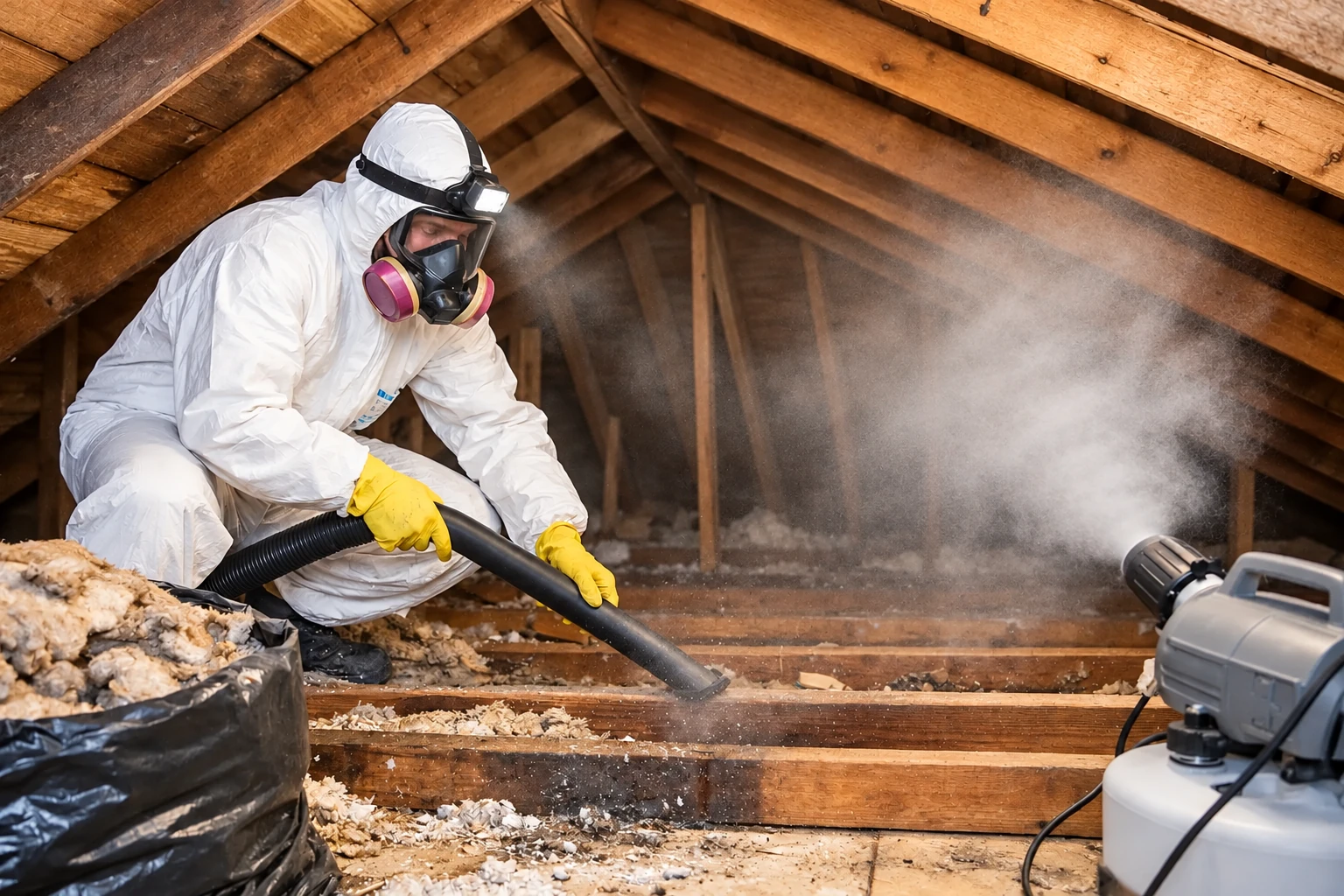
Sometimes the attic is only part of it. If the old layer is soaked or has had animals in it, it comes out first through our insulation removal service, and if cold floors or drafty rooms bother you too, our home insulation work looks at the whole house instead of just the ceiling. When your ductwork runs through the attic, I'll talk through spray foam with you, since it costs more but seals and insulates at once. For most attics, sealing the gaps and blowing in loose fill is the better buy.
Topping up what's already there
This suits an attic where the insulation is dry and clean but has settled thin over the years. We seal the floor, set the baffles and blow new fill right on top, which keeps the cost down because nothing has to come out.
Clearing out and starting fresh
This suits an attic where the old layer is wet, stained or has had pests living in it. It costs more and takes longer, but laying new fill over that kind of mess would only bury the problem you're trying to fix.