B&C North Charleston InsulationB&C North Charleston InsulationRequest an estimate(843) 278-0240

Insulation removal in North Charleston SC - a clean attic ready for new insulation

Soaked, flattened or droppings-filled insulation over your ceiling? We take out what's ruined, keep what still works and leave the attic ready for a fresh layer.

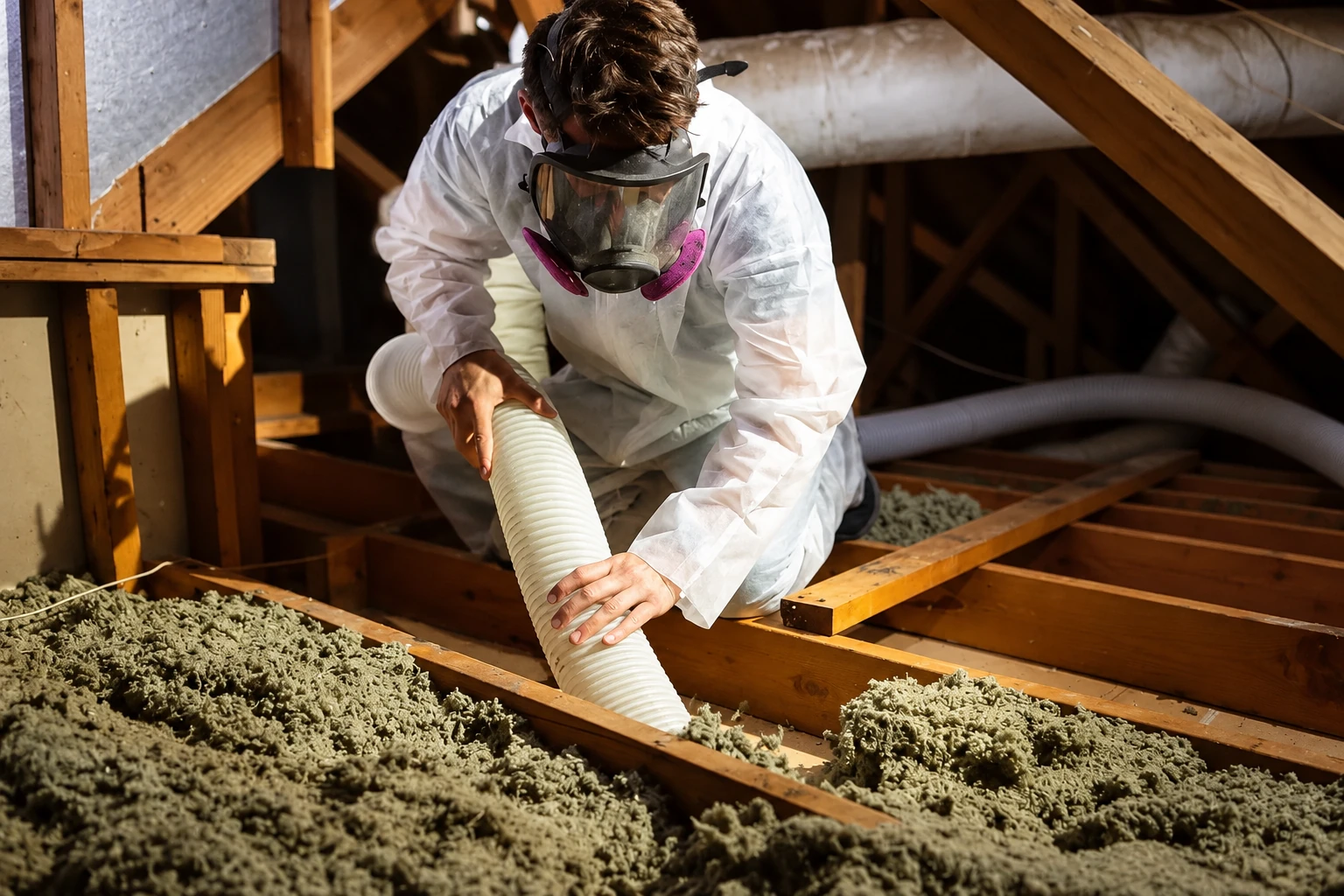
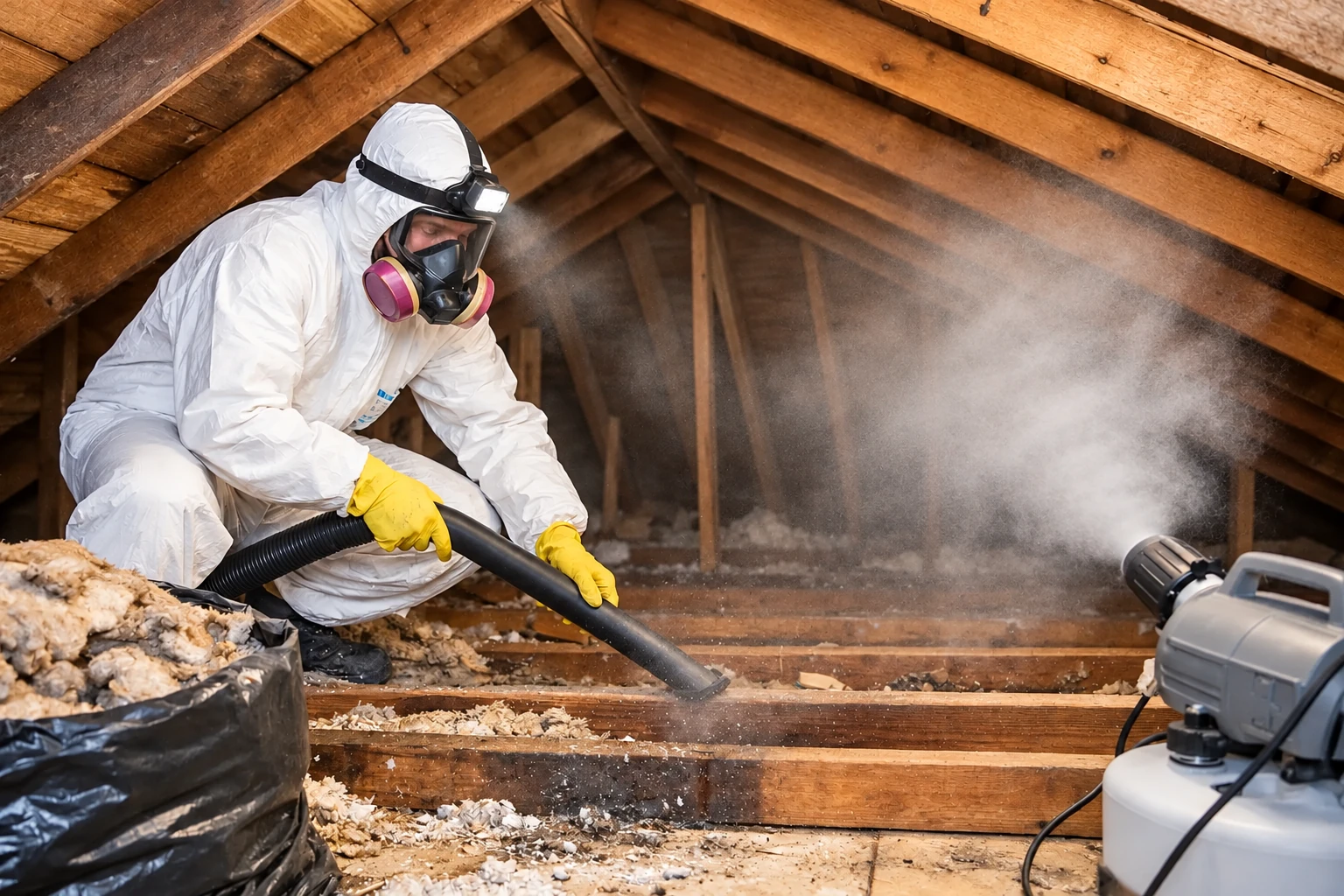
A worker in protective gear vacuums old attic insulation through a hose as dust rises nearby.

Does the old insulation in your attic need to come out?

Insulation removal in North Charleston means taking out attic insulation that's soaked, fouled by pests or packed too flat to work, so the attic can be sealed and insulated again from a clean start.

Most calls start with a hot upstairs, a power bill that keeps climbing, a stain on the ceiling or droppings by the attic hatch, and older houses often have a few layers up there from different years. Not all of it has to go, and a lot of the time it can stay under a fresh layer of attic insulation. What moves the price is how much has to come out, how big and how easy to reach your attic is, and whether we seal and insulate in the same visit, and those same things decide how long we're up there. Your estimate breaks out each step so you can see where your job falls.

How we handle insulation removal

I start by going up and checking the whole attic, edges included, for wet spots, stains, droppings and insulation packed flat, because that tells us what has to go and what doesn't. We only pull old insulation when it's wet, fouled by pests or too flattened to do its job, and otherwise I'll tell you it can stay. When something has to come out, we cover the path through your house, take the old material out and clean the attic floor down to the framing, so the new layer isn't sitting on the old problem. A roof leak or the gap the pests came through has to be fixed before anything new goes in, or the trouble just comes back under fresh insulation. Then we air seal, closing the gaps around can lights, pipes and the attic hatch, and insulate with the eave vents kept open and the edges as deep as the middle. If anything up there looks like vermiculite, we stop right there and point you to a licensed abatement firm, for the reasons in the questions below.

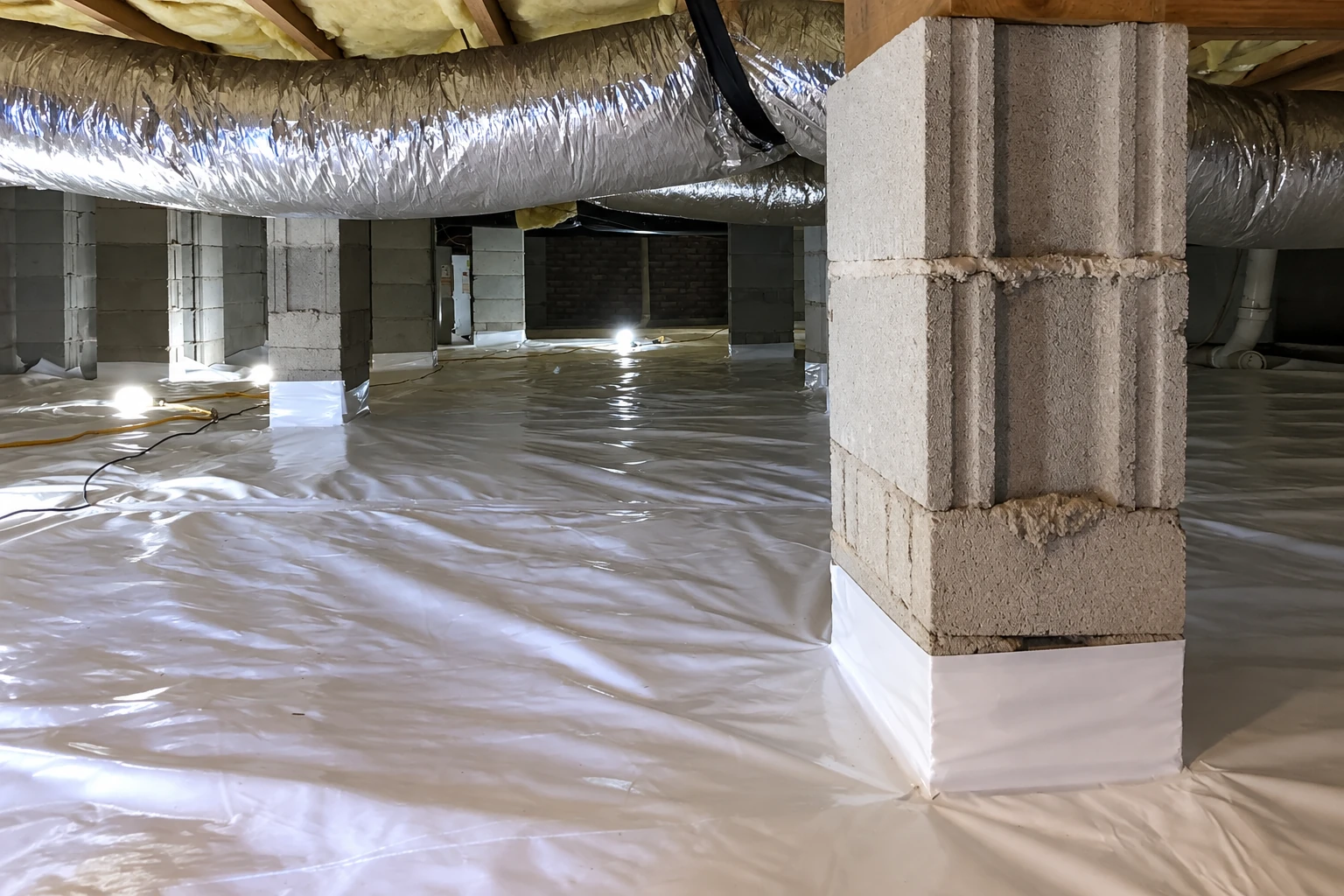
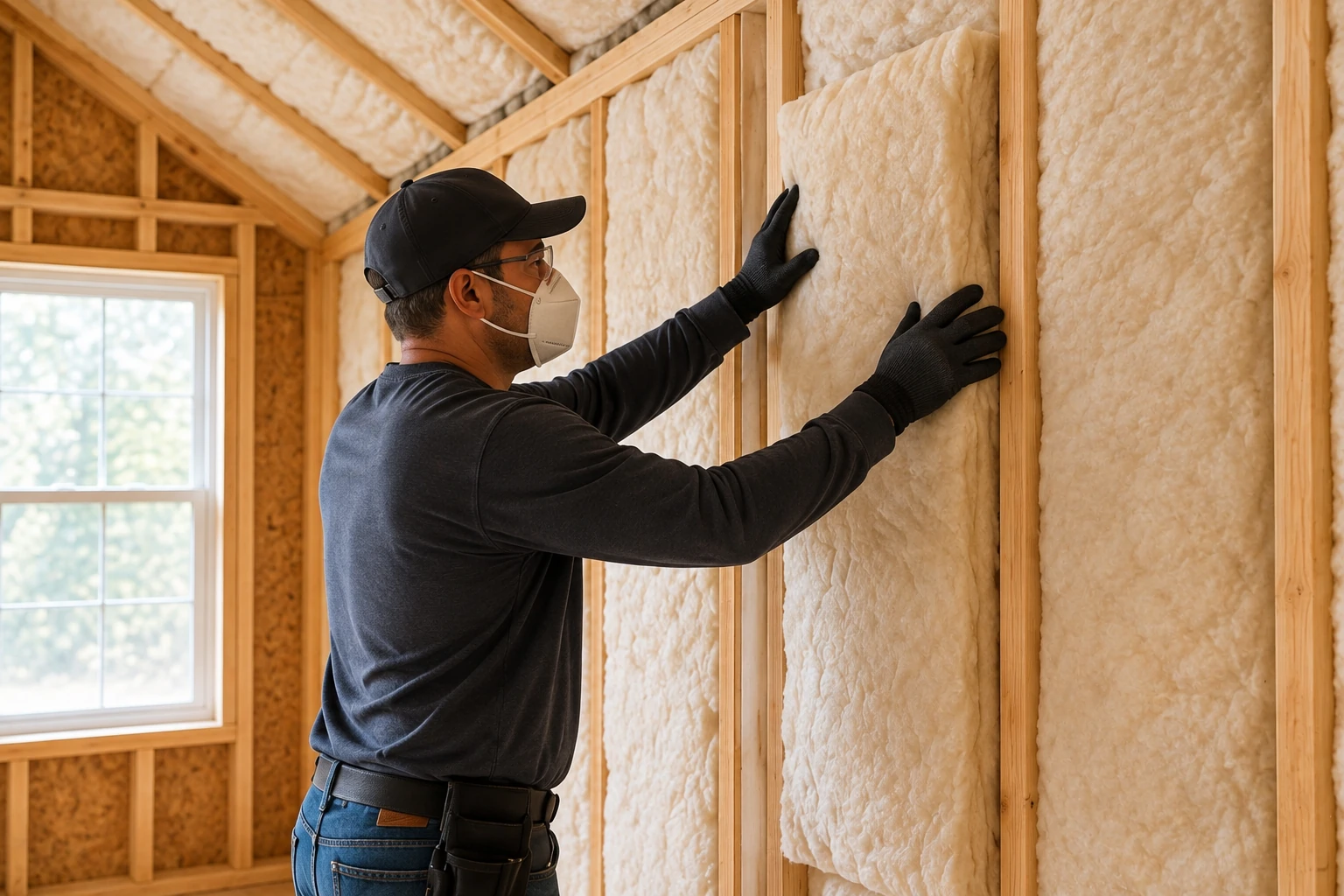
The same problems turn up in other parts of the house. Wet or fallen batts under the floor come out and get replaced as part of our crawl space insulation work, and when a wall has been opened after a leak, the soaked insulation inside comes out before we do the wall insulation.

Leave it and top it up

If the old layer is dry, clean and still fairly full, it stays, and we seal the gaps and add blown-in, loose fill blown through a hose, right on top. It's usually the least you'll spend, and it's the answer more often than people expect.

Pull the damaged section, keep the rest

This suits an attic where the damage stays around one leak, one nest or one corner the pests used. We take out that area and a margin around it, then build the new insulation back up to match the depth of what's left.

Take it all out and start clean

This suits an attic where the whole layer is wet, fouled or flattened, or where you're changing to a different kind of insulation. It costs more up front, but it's the one way to see and seal every gap before the new layer goes in.

Why North Charleston homeowners call B&C North Charleston Insulation for insulation removal

I look at every attic myself

I come out to every job, go up into the attic and write the estimate myself, step by step, so you can see what comes out and what goes back in. Our installers do the work with me or a lead installer on site.

An HVAC tech's eye for attics

I spent years as an HVAC service tech before starting this business in 2023, and on those calls I kept finding leaks and thin insulation around the equipment. That's why we look for the gaps and the wet spots before deciding anything has to come out.

Licensed and fully insured

South Carolina counts an independent contractor doing specialty work for a homeowner on a job over $500 as a residential specialty contractor, and insulation installers are on the state's list of those trades. We're licensed and fully insured.

We'll tell you when it can stay

I'd rather tell you your insulation can stay than sell you removal your house won't use, and plenty of attics only need sealing and a top-up. Satisfaction guaranteed. Call (843) 278-0240 or use our contact form, and I'll come take a look.

Find out what has to come out of your attic

Call (843) 278-0240 or send the form, and we'll reply within one business day to set a time. I'll come out, look over the attic and write you a free estimate on site, with no pressure and no obligation. It helps to have the attic's rough size, what the insulation looks like and its color, and any signs of water, mold or pests ready when we talk.

Location
North Charleston, SC 29418
Hours
Mon–Sun: 8 AM–9 PM

Insulation removal permits and older attics in North Charleston

The City of North Charleston requires permits before anyone builds, adds to, alters, demolishes or moves a structure, and that list doesn't name insulation removal, so the rule alone doesn't settle whether your job needs one. North Charleston also stretches across Charleston, Berkeley and Dorchester Counties, so we find out which city or county office covers your address, check what it asks for and take care of any permit your job needs before we start. If you'd like to ask yourself, the city's permit office takes questions at 843-740-2562, 2564 and 2569.

Most of the attics we open around here belong to older houses, where insulation has been added in layers over the years and an old roof leak or a squirrel problem often ruined one section while the rest is fine. We're based in North Charleston and do the same work across the cities around it, including Hanahan and Goose Creek. If your city isn't listed, call and ask.

Questions about removing old insulation

How do I know if my old attic insulation needs to come out?

It needs to come out when it's wet, moldy, fouled by rodents, holding vermiculite or asbestos, or packed down to less than half its original thickness, according to one industry guide. If it's dry, clean and free of mold and pests, the same guide says a new layer can go on top and you skip the removal cost. Soaked fiberglass is the one people miss, because the guide notes it stays collapsed after it dries and never gets back to its rated R-value, the measure of how well it slows heat.

What should I do if my attic has vermiculite insulation?

Leave it alone and treat it as if it contains asbestos, which is the EPA's advice, and you don't need a test to take that precaution. Vermiculite is a pour-in, pebble-like material, usually gray-brown or silver-gold. If you decide to have it removed, the EPA says a trained, accredited asbestos abatement contractor should do it, separate from whoever assessed it, and South Carolina requires those firms to hold a state asbestos project license for each job.

Do I have to remove old insulation before getting spray foam?

Yes, the old layer comes out first, because one industry guide notes that foam can't form an air seal over existing material. Foam costs more and seals air while it insulates. For most attics I'd rather seal the gaps and top up loose fill, unless your ductwork runs through the attic, where foam usually earns its price.

How much does attic insulation removal cost in North Charleston?

Attic insulation work in the Charleston area usually costs about $1,350 to $4,500 per job, and that's what the market charges around here, not a price from us. Where your attic lands depends mostly on how much has to come out and what goes back in after it. Your estimate shows where yours falls before any work is scheduled.

How long does insulation removal take?

One industry guide puts an attic under 1,000 square feet at one day and a larger attic at two. Sealing and new insulation can add time on top of that. I'll tell you what I expect for your attic once I've been up there.

Call (843) 278-0240